
INTRODUCTION
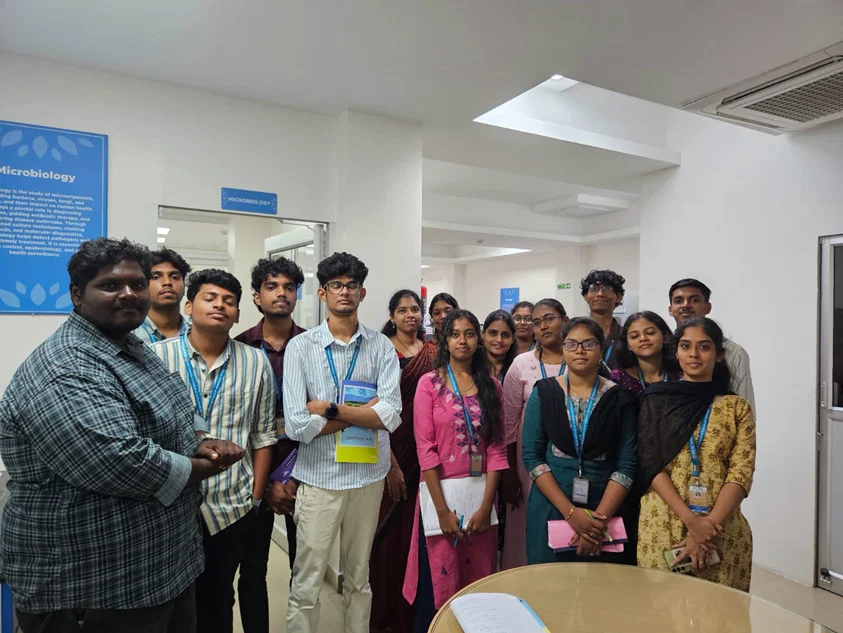
The primary objective of this visit was to gain a comprehensive understanding of the inner workings of a diagnostic laboratory specializing in various medical disciplines. By observing the operations, technologies, and procedures first-hand. This visit also sought to explore how different departments within the lab collaborate to provide holistic diagnostic services.
LAB OVERVIEW & INFRASTRUCTURE
Location & Facilities: The diagnostics lab is located on 4th Floor, No.129, S-Block, Sri Balakrishna Nagar, Ramapuram, Chennai-600089. Tamil Nadu, India.
Personal Protective Equipment (PPE): All lab personnel are required to wear appropriate PPE, including lab coats, gloves, masks, and face shields, to minimize exposure to hazardous materials.
Sample Handling: Samples are handled in designated areas with biosafety cabinets to prevent contamination. Specimens are transported in sealed, labeled containers to minimize the risk of exposure.
Waste Disposal: The lab adheres to strict protocols for the disposal of biological and chemical waste. Sharps containers, biohazard bags, and chemical waste bins are used to segregate and dispose of waste safely. Regular waste removal and disposal by certified contractors ensure compliance with environmental regulations.
Decontamination Procedures: Regular decontamination of work surfaces, equipment, and high-touch areas is conducted using appropriate disinfectants. Autoclaves are used for sterilizing reusable equipment.
Training and Audits: Continuous training programs on safety and hygiene practices are conducted for all staff members. Regular internal and external audits ensure adherence to safety protocols and identify areas for improvement.
3. DEPARTMENTS AND SPECIALIZATIONS
3.1 Hematology
Hematology is the branch of medicine that deals with the study of blood, blood-forming organs, and blood diseases. The technologies used are“ALIFAX Test Roller 20LC”. The Alifax Roller 20 LC is an advanced automated analyzer designed for measuring the erythrocyte sedimentation rate (ESR) using the Westergren method.
3.2 Serology
Serology is the scientific study of serum and other bodily fluids, focusing primarily on the identification of antibodies and antigens present in the fluid. Technologies used are“Elisa Reader”. Elisa Reader is an advanced instrument used for analyzing enzyme-linked immunosorbent assays (ELISA) in clinical and research laboratories. Its reliability and ease of use make it a crucial tool for both diagnostic and research applications. Technologies Used: The equipment used is “Hitachi Cobas c411”. It is a compact and efficient clinical chemistry analyzer designed for the automation of biochemical testing in laboratories. It provides a wide range of diagnostic assays, including tests for glucose, cholesterol, electrolytes, enzymes, and other critical biomarkers.
3.3 Microbiology
Microbiological cultures are used to grow and isolate microorganisms from clinical samples such as blood, urine, or swabs. These cultures are incubated in specific media under controlled conditions to encourage the growth of pathogens. Common methods include streak plating, broth cultures, and selective media that target specific types of microorganisms. Cultures are essential for diagnosing infections and determining the presence of bacteria, fungi, or other pathogens. Technologies Used: The equipment used is “Digital incubators and PCR test kits”. These are critical in modern diagnostic laboratories. Digital incubators provide precise temperature control for incubating microbial cultures and samples, ensuring optimal growth conditions and reliable results. PCR test kits, on the other hand, are pivotal for molecular diagnostics. They enable the amplification and detection of specific DNA or RNA sequences, allowing for the identification of pathogens or biomarkers associated with diseases.
3.4 Pathology
Pathology is the branch of medicine that involves the examination of tissues, organs, and bodily fluids to diagnose diseases and understand their progression. Pathologists study the structural and functional changes in tissues and cells caused by disease processes. Technologies Used: The instruments used are “Centrifuges,Urinometers,Autoclaves and cryostats”. Together, these instruments form the backbone of effective laboratory operations. Centrifuges prepare samples for testing, urinometers assess urine properties, autoclaves ensure sterilization, and cryostats enable detailed tissue analysis. Their combined functionality supports a wide range of diagnostic and research activities, ensuring accuracy, reliability, and safety in laboratory environments.
3.5 Bacteriology
Bacteriology is a specialized branch of microbiology focused on the study of bacteria, including their physiology, morphology, genetics, and their roles in health and disease. This field is crucial for diagnosing bacterial infections, understanding bacterial pathogenesis, and developing new antimicrobial therapies. Technologies Used: The instrument used is “BD BACTECTM FX40”. It is a cutting-edge automated blood culture system designed for advanced bacteriological analysis in microbiology laboratories. This system plays a crucial role in detecting and monitoring bacterial infections in blood samples by continuously tracking microbial growth. Utilizing advanced fluorescence technology, the BACTEC FX 40 accurately measures changes in fluorescence that indicate microbial activity, allowing for early and precise detection of pathogens. Its high-capacity design supports the simultaneous processing of numerous blood culture bottles, making it ideal for high-throughput laboratories.
4. CONCLUSION
4.1 Summary of Visit
The visit to the diagnostic lab provided a comprehensive overview of the intricate operations and advanced technologies employed in the fields of hematology, serology, immunology, microbiology, pathology, and bacteriology. Key observations and insights gained include:
Hematology: Observed the use of automated hematology analyzers and manual techniques for blood sample analysis. Key tests, including CBC and coagulation studies, were examined for their critical role in diagnosing various blood disorders and conditions.
Serology: Gained insight into the importance of serological testing in detecting and diagnosing infections and autoimmune diseases. Techniques such as ELISA and Western blot were highlighted for their sensitivity and specificity in identifying antibodies and antigens.
Immunology: Witnessed the application of immunological techniques like flow cytometry and immunofluorescence for analyzing immune cell populations and identifying markers related to diseases. These methods are essential for understanding immune responses and diagnosing immunological disorders.
Microbiology: Examined the workflow of culturing and identifying bacterial pathogens, performing antibiotic susceptibility tests, and utilizing molecular diagnostics. Technologies like MALDI-TOF MS and PCR were observed for their role in rapid and accurate bacterial identification.
Pathology: Observed the integration of histopathology, cytopathology, and molecular pathology in diagnosing diseases. Advanced staining techniques and digital pathology systems were utilized to study tissue samples, providing valuable insights into disease mechanisms and aiding in the diagnosis of various conditions.
Bacteriology: Gained insights into the study of bacterial pathogens and their impact on health. Observed key techniques such as culture methods, antibiotic susceptibility testing, and molecular diagnostics. Technologies like PCR and MALDI-TOF MS were noted for their role in identifying bacterial species and determining antibiotic resistance. The visit highlighted the essential role of bacteriology in diagnosing infections, guiding treatment, and understanding bacterial resistance mechanisms.
Overall, the visit underscored the essential role diagnostic labs play in providing accurate and timely diagnostic information, which is crucial for effective patient management and treatment.
4.2 Personal Reflections
Reflecting on the visit, I am deeply impressed by the complexity and precision involved in diagnostic laboratories. The integration of advanced technologies and meticulous protocols ensures the reliability of test results, which are vital for diagnosing diseases and guiding treatment decisions.
Diagnostic labs are the backbone of modern healthcare, bridging the gap between clinical symptoms and effective treatment. They enable clinicians to make informed decisions based on accurate data, ultimately improving patient outcomes. The dedication of professionals working in these labs and their commitment to maintaining high standards of quality and accuracy is truly commendable.
This visit reinforced my understanding of the critical importance of diagnostic labs and has further fueled my passion for pursuing a career in integrating machine learning and image processing with medical imaging. The ability to contribute to such a vital field, where technology and healthcare converge to enhance patient care, is both inspiring and motivating.